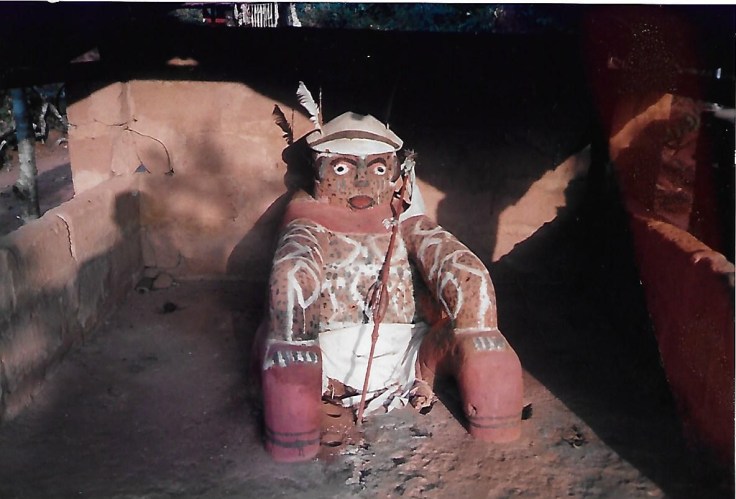
Sometime around 1883, in my ancestral home of Eke some miles east of the River Niger in Nigeria, the widow Chinazungwa Ijeonyeabo, was brought before the terrible oracle of Ani Amankwo for judgement. She was one of the four wives of Ozo Omulu Onwushi the wealthy farmer who had died a few years earlier. She had been accused of poisoning a young man—a nephew of one of her husband’s wives—who had threatened her only son Onyeama with violence. Chinazungwa is said to have been a hard-working, well-liked belle when she married the rich farmer, but she had grown increasingly bitter and envious of her husband’s other wives because, in a society that highly valued childbearing women, she had been able to have only one child.
As was the law, she was to be tried before the shrine of Ani Amankwo in an ordeal where the Eke elders would give her a cup of poison to drink. If it killed her, she was guilty. If it did not, she was innocent. She was expected to swear an oath before the deity that asked the god to kill her with the drink if she lied, or render it harmless if she was innocent. Some say she broke down in babbling terror and confessed at the shrine, others say she refused the drink, and was declared guilty by the elders. The elders led her away, and she was never seen again, presumably killed, or sold into slavery.
According to tradition, all her progeny, because they issued from an evil woman and were dangerous seed, would have to be sold into slavery. The elders therefore agreed to sell her only son Onyeama, who was about nine or ten at the time.
Fortunately for Onyeama, his oldest brother, Amadiezeoha, was the town’s primary slave trader. Amadiezeoha was very fond of Onyeama, and rejected the idea of selling his half-brother, preferring to keep him in his household, and raise him as he would a son. It is likely that he was only able to do this because of the huge influence he had in the Eke society of the time.
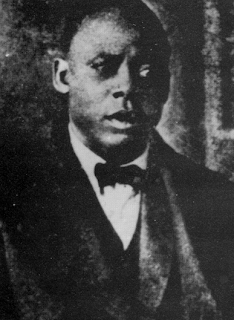
Amadiezeoha became the Ozo Nwankwo as a result of his wealth and influence. In precolonial times, the sacred “ozo” title was highly respected throughout Igboland. Some sources say that to become an ozo, you had to be without moral blemish—you could not be a thief, a murderer or an adulterer. This means that Amadiezeoha’s line of business was not seen by the society of the time as the morally leprous activity we consider it today.
Amadiezeoha had grown enormously wealthy from a slave trading partnership with an Arochukwu man, Okolorie Nwamadingam. From the 17th century to the end of slavery in Eastern Nigeria in the 1950s, the Aros had a near monopoly on the slave trade in Igboland and neighboring parts. According to some sources, you could only get into the trade by partnering with an Aro merchant.
The Aros had originally crossed the Cross River into Igboland (some say in the early 1600s) from Efik and Ibibio territory with their deity Ibinukpabi, a god they vigorously promoted as “Chukwu Okike Abiama”—The Great Creator God Who Has Come To Live Here [in Arochukwu]. Ibinukpabi overtime became the chief oracle in Igboland, drawing in droves to its numinous shrine located in gloomy caves at Arochukwu people who wanted to settle disputes. There, some artfully placed drums and speaking tubes created the impression of a god that spoke with the terrifying voice of thunder. Many disputants and people found “guilty” by the god disappeared into the caves, never to emerge. They were said to have been eaten by the god, but were actually loaded onto canoes by the priests of the shrine and paddled down the Cross River to the coast where they were sold to European ships. In British colonial history, the shrine was more popularly known as “The Long Juju of Arochukwu.”

The awe and fear the god inspired provided the Aros with the protection they needed to travel freely across Igboland and establish a trading dominion over the land. Aro traders were known as “nwa Chukwu” or child of the Supreme God, and what they established in Igboland could be seen as a proto-colonial empire. Where this respect for their “Children of God” status was not enough, the Aros called upon their neighboring warrior tribes, the Abam and Ohafia, and paid them to sack any recalcitrant town or village.
The slave merchant Ozo Nwankwo Amadiezeoha was my maternal great-grandfather. Did he participate in the Atlantic Trade directly or indirectly? It is difficult to say for sure. He was about 25 years older than his half-brother Onyeama, which puts his birth somewhere about 1848 or 1849. If he became an apprentice slave trader at 14 or 15, the age at which, traditionally, Igbo males go through manhood rites, he was in a position to have participated in some way in the tail end of the nefarious trade, especially the illegal trade that ran the gauntlet of the British Naval blockade aimed at stopping it, and the Portuguese trade that only ended in 1870. But at the time, the Atlantic Trade had been severely curtailed by the British Naval anti-slavery patrols and most Igbo traders were probably turning to the internal African slave trade.
Of course, if he was involved in the Atlantic Trade, he did not, and could not deal directly with Europeans on the coast some three hundred miles away. With his partner Nwamadingam, he traveled to slave markets and slave fairs around Igboland, including the well-known ones at Bende, Arochukwu and Arondizuogu, where they sold slaves gathered and purchased from the interior. They were middlemen merchants, part of the slave trading networks in the interior that gathered the slaves that were eventually sold to the kingdoms and city states on the coast.
Some Africans from the continent and the diaspora are in denial today over the willing participation of African peoples in the Atlantic Slave Trade. Others accept that Africans sold other Africans to the Europeans and seek to apportion blame for what they see as a heinous crime. While no one disputes that slavery is a terrible crime by the moral standards of today, the issue is far more complex than the simple polarity the dispute today would suggest.
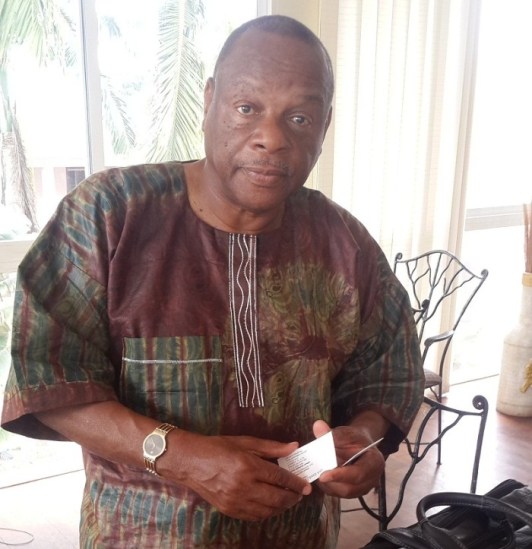
Dr. Molefi Kete Asante, the African-American Afrocentric scholar, is one of the more prominent representatives of the people in denial. On his webpage , he challenges celebrity scholar Dr. Henry Louis Gates’ assertion in the New York Times that Africans are culpable in the Atlantic Slave Trade.

That Africans gathered slaves for sale to Europeans should no longer be controversial, so I am not going to bother to point out all the glaring errors in Dr. Asante’s write up and reasoning. Just a couple of egregious examples will do: He claims that there was no African slave trade, only European. This is strange. How can there be no African slave trade if Africans traded their slaves for European manufactures? How can there be no African Slave Trade if the internal trade in Africa was an important economic and widespread activity that existed at least six centuries before the Atlantic Trade, and continued long after the Atlantic Trade ended?
The sources of slaves were primarily warfare, kidnapping and crime—if you committed a crime or violated a taboo, slavery was the equivalent of going to jail for life for it. It is important to recognize that warfare—by far the largest supplier of slaves in all the historical slave trades around the world—was not an activity that was created by slave demand, though slave demand could and did play a part in some wars.
Yes, the African slave market expanded enormously due to European demand and the European trade goods that flooded the interior, but it was organized and run by Africans. Coastal Africans purchased slaves from the interior slave markets, and exchanged them with Europeans on the coast for the European goods the Africans on the coast and the interior wanted. Those European goods found their way back into the interior where they were sometimes used to purchase slaves. The African side of the slave trade stretched hundreds of miles into the interior where trade networks stimulated by the European manufactures had been going for a long time. The Europeans had very little knowledge of these interior markets, and were usually not permitted to travel into the interior to find slaves, contrary to what we sometimes see in movies and on television.
The autobiographical accounts of former slaves from the Bights of Benin and Biafra like Bishop Samuel Ajayi Crowther and Olaudah Equiano confirm that there was a thriving domestic African market for slaves. Crowther and Equiano were traded from owner to owner and merchant to merchant in the interior, up to seven times, before they were eventually sold to Europeans on the coast.


It is important to recognize that the African slave merchants were not passive players, that if the Africans on the coast did not want what the Europeans had brought to exchange, they did not trade slaves. The Atlantic Slavery historian Herbert S. Klein tells us that European slave traders who brought trade goods for exchange were subject to the vagaries of demand on the African coast. If, for example, a particular type of fabric that was in fashion last year, but no longer in fashion this year was offered, the coastal people would say no deal—yes, something as fickle as fashion could frustrate slave buyers, because that fabric was an economic good that had to be exchangeable in the interior markets. If people no longer demanded it, it was of no use as an exchange good for slaves. Contrary to popular stereotypes about accepting cheap and worthless articles, the Africans were very discriminating about the goods they accepted for the slaves.
Dr. Asante further asserts that “in a system of oppression there will be collaborators.” He then compares African slave traders to the Jews who collaborated with the Nazi regime. This is one of his weakest and most propagandistic arguments. The Jewish collaborators were faced with a false choice of death or collaboration. It is hard to see how the Africans on the coast, especially those in the Bights of Benin, and Biafra, the Gold Coast, and the Senegambia coast, were faced with such a choice.
The Africans on the coast, difficult as it may be to believe today, were in a more powerful position vis a vis the Europeans slavers of the time, and they dictated the terms of trade (this will be discussed in further detail in my next post).
For example, the Africans sometimes arbitrarily demanded higher “Comeys” or commissions from the Europeans for the privilege of purchasing slaves from their section of the coast. These commissions were like an export duty or tax paid to African coastal authorities by the Europeans, and it is separate from the price paid to African merchants for the slaves.
In one case, in April 1763, Captain James Berry of the Liverpool brig Dalrimple refused to pay the commission demanded of him at Old Calabar. The Africans patiently left him to cool his heels for 15 days, whereupon he “aggreed to pay 1000 Coppers among’s the King and Duke each 65 Crs the rest of the Gentlemen in proportion….[he agreed to disburse one thousand pence to the King and the Duke of Calabar and their officials] ” He thought he had satisfied all obligations, but to his surprise, a member of the ruling family of Calabar, Ephraim Robin John, sent ten canoes full of men to arrest him. Berry was locked up for 29 days, after which he agreed to pay “4251 Copper” and in addition, Robin John confiscated one of his “great guns” (the ship’s cannon) as well as 3 muskets, 2 blunderbusses, 2 pistols and 2 cutlasses. There are many such accounts of double-dealing and extortion on the part of the Africans; it certainly was not a situation where they were coerced into collaborating with the Europeans.
The coastal Africans did not just supply slaves, they transformed their entire economies to service the trade. They providing “krumen,” that is, skillful canoe operators who traversed sandbars and violent surf and ferried slaves and sailors to and from slave ships safely. The Africans also supplied trained tradesmen such as ship’s carpenters who helped repair damage to the slave ships. They supplied the slave ships food such as yams and vegetables for the slaves on board, and in some cases, had farms nearby to provide these items.
If the frightening disease climate of the region cut down the European sailors who had very little natural resistance to tropical diseases, there were free African sailors ready to step into the breach, and work on the slave ships as it traveled first to the Americas, then to Europe, and then the African sailors returned to Africa on other slave ships. In her seminal book Slave Ship Sailors and their Captive Cargoes, 1730-1807, Emma Christopher reports that the crews of slave ships were sometimes multi-racial, and that slaving drew in “Africans as seamen, porters, interpreters, cooks, canoemen, sentinels and pilots. Africans too became members of the seafaring rabble which was employed on ships that plied their trade around the Atlantic’s shores.” She writes that African peoples from the coast sometimes had better seafaring skills than their European counterparts, and sometimes held out for more pay from desperate ship’s captains trying to leave as quickly as possible before too many of their crews died of malaria and yellow fever.
The participation of Africans goes well beyond the ordinary Africans on the coast seeking to earn a living in wages from the infernal trade. African merchants visited Europe as free travelers on the slave ships to meet with their “business partners” on the European continent. And they sent their children to school in Europe on board those slave ships, some of whom ended up being very accomplished scholars like the philosopher and professor at a number of German universities, Anton Wilhelm Amo, sent to Europe from the Gold Coast as a boy of four in the 18th century.
Clearly, continental Africans were an important and willing partner in the Slave Trade to the Americas. Obviously, the millions of slaves were unwilling participants, but the Africans who enslaved and sold them, saw nothing wrong with what they were doing. Of course we do today; the whole world, or most of it, has gone through the moral evolution that now sees slavery as a terrible harm done to fellow human beings.
Do I feel guilty about my great-grandfather’s participation in the heinous traffic? Not at all. Ozo Nwankwo is a man known to me only through oral traditions and family stories. He and his times are completely alien to me; they belong to another universe, a universe with values I completely reject. I do not see his activities as having anything to do with who I am today beside the obvious fact of blood ties. And if we make that a deciding factor in guilt, then we are all guilty because, as has been said countless times, it is likely that nearly all human beings in existence have both slave holders, and slaves in their ancestral lines.
SOURCES:
The Atlantic Slave Trade by Herbert S. Klein
Slavery: A new global history by Jeremy Black
Africa Remembered: Narratives by West Africans from the era of the Slave Trade by Philip Curtin
The Interesting Narrative of the Life of Olaudah Equiano, or Gustavus Vassa, The African, written by Himself edited by Werner Sollors
The Slave Trade and Culture in the Bight of Biafra by G. Ugo Nwokeji
Slave Ship Sailors and Their Captive Cargoes, 1730-1807, by Emma Christopher
History of the Liverpool Privateers and Letters of Marque, with an account of the Liverpool Slave Trade 1744-1812, by Gomer Williams.
Documents Illustrative of the History of the Slave Trade to America, Vol I, by Elizabeth Donnan
Africa’s Discovery of Europe, 1450-1850 by David Northrup
The Two Princes of Calabar by Randy J. Sparks
Chief Onyeama: The Story of an African God by Dillibe Onyeama
Sunrise in Enugu by Humphrey Aniago
The Abolition of the Slave Trade in Southeastern Nigeria 1885-1950, by A. E. Afigbo
 How Africans Underdeveloped Africa
(Africans) dictated the terms of trade
-Europeans controlled shipping, insurance, finance, and global markets. Africans could negotiate prices, but had no leverage regarding the terms of existence.
“Dictated the terms”
Overstates power; they dominated local supply, not trans-Atlantic logistics.
The Africans who enslaved and sold them saw nothing wrong with what they were doing-
I am then curious why, from about 1550, the warrior kings Oba Esigie and Oba Orhogbua banned slave exports [Disney, A. R. 2009, p.63]. The Benin kingdom was therefore the first to ban slave exports and prohibit the transatlantic slave trade.
African slavery pre-existed, yes, but the Atlantic system’s extraction scale and racial ideology were European innovations. Africans’ complicity doesn’t equal parity in culpability. I am looking forward to the next post; hopefully, you will clarify some of these misses.
LikeLike
Thank you for your question clay sculpture. However, I fail to understand what you mean by “the terms of existence.” For whom? For the Africans? I am not sure how you can say that the Africans did not control the terms of existence on their territory. They made most of the rules that the Europeans had to obey, or the Europeans faced consequences. They controlled the supply of slaves for the African coastal market, which means they controlled the supply of slaves for the Atlantic market.
That the Europeans controlled shipping, insurance, finance and global markets, only had bearing on the trading on the coast in that it regulated the number of ships that could participate in the trade from their base in Europe. Otherwise the Africans didn’t have to care. You seem to be confusing what exists today with the nascent global trading system that was not anywhere close to being fully integrated like it is now. But perhaps I am missing something: can you explain to me how European control of European shipping insurance, European shipping, European finance, and global markets that Africans were (misguidedly) only interested in the slave supply segment, detracts from the control African kingdoms and polities had on the African coast?
It is hardly an overstatement to say that Africans DICTATED the terms of trade on the coast. Of course they could not do anything about the wars Europeans sometimes fought among themselves that reduced or stopped the demand for slaves. But then, unlike now, the Africans were in a position to arbitrarily raise prices, reject entire ship loads of trade goods causing great loss for the European merchants who had invested in the goods, or cause slave ship captains that annoyed them and refused to meet their demands to spend a dangerously long time on the coast. They had all manner of powers of blackmail.
As far as I know, Bini only banned the export of their own people or citizens. They continued to trade war captives from outside their kingdom. This claim about the Bini kingdom sounds like the claims about King Afonso of Kongo, and King Agaja Trudo of Dahomey. They are claims that don’t stand up to scrutiny. Your source (Disney A.R. 2009, P63) actually says, “….just as growing demand in the New World was opening up new opportunities for the traders, Benin itself faded as a source of supply. This was partly because the oba, needing more manpower himself, decided to limit the outward flow of males – and then, from about 1550, to prohibit slave exports altogether…” According to your source then, they didn’t ban it because they saw anything morally wrong with slavery. There is also much evidence that the Edo empire (Bini) continued to export slaves through its colony in Lagos or Eko. In fact, in the 1850s, Oba Kosoko of Lagos told the British that he could not stop selling slaves to the Portuguese because he was a vassal of the Oba of Bini, who would not permit it.
Your claim that African complicity doesn’t equal parity in culpability has me scratching my head. But Africans on the coast ENTHUSIASTICALLY PROVIDED the large numbers of slaves extracted. They brought them in large numbers to the coast. Why are they not culpable for that? As for the racial ideology practiced in the Americas, I am at a loss to understand why you think this was relevant to culpability in the slave trade on the African coast.
LikeLike